Unofficial community guide · SIGGRAPH 2026
MotionBricks: NVIDIA's real-time motion model, explained end to end
MotionBricks (also written Motion Bricks) generates humanoid animation and robot motion live instead of playing back authored clips. This guide walks you from a working G1 demo to UE5 integration — every number linked to NVIDIA's own sources.
Install MotionBricks on your CUDA box Free code (Apache 2.0) · no account, no license key to read this site
Many community posts repeat a “5,000 FPS” figure. It is wrong: the official project page and README both state 15,000 FPS / 15000 FPS. Cite the paper, not the hype thread.
What it actually does
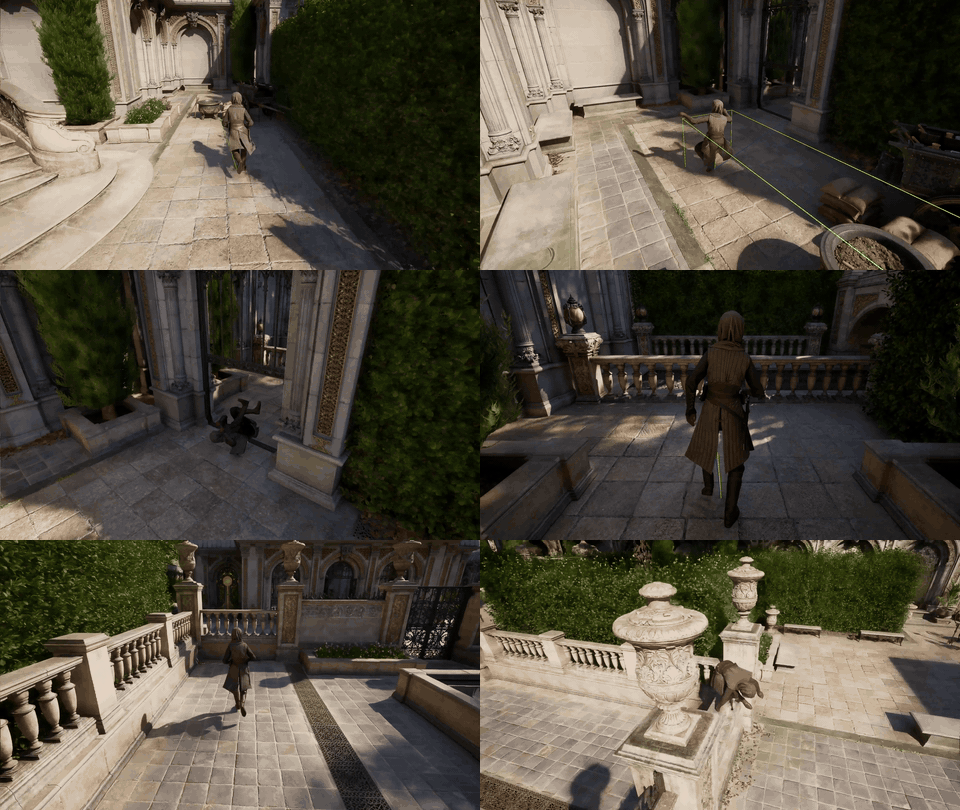
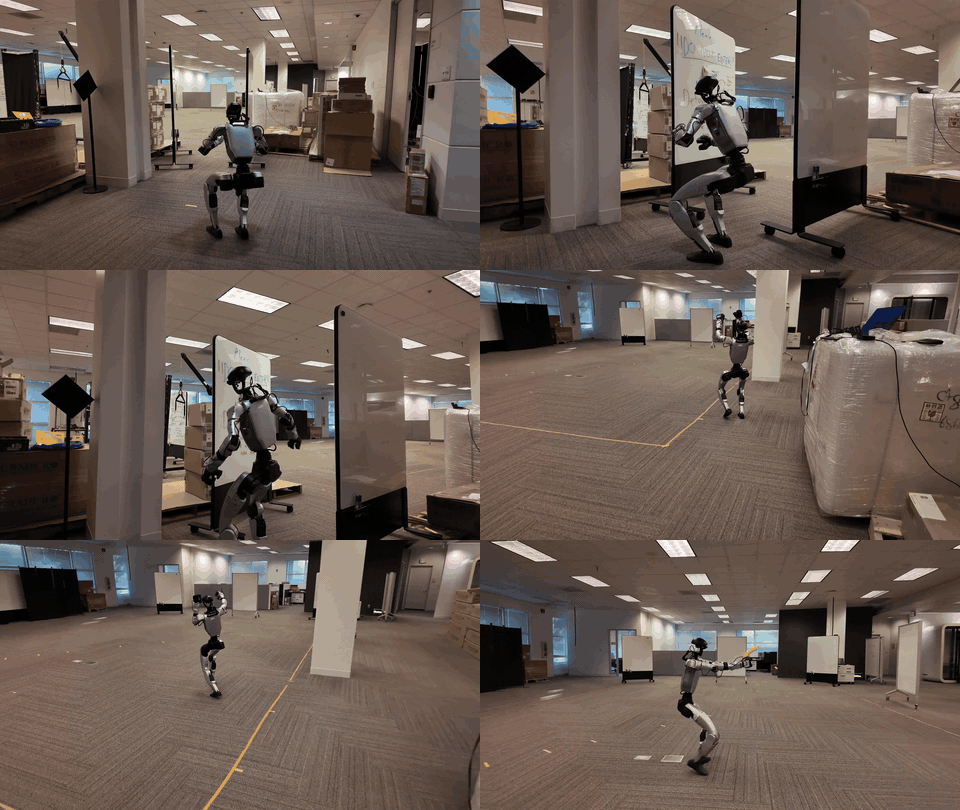
Two ideas carry the whole design. A modular latent backbone models a 350,000-plus clip corpus in one model, so adding skills does not mean adding systems. Smart primitives — locomotion, objects, interaction — give you one command surface for navigation and object contact, as described in the paper.
Start here
Setup guide
Clone with Git LFS, pull the ~2.2 GB checkpoints, avoid the 1 KB pointer-file trap, run the demo. The page most people need.
Interactive G1 demo
All 15 keyboard controls (WASD plus 11 style keys), the camera tricks, and what the crawling-mode limitation means.
UE5 integration
How the official 2:40 uncut demo was authored, and what is public versus still unreleased for engine work.
Unity status
The honest answer on Unity: no official plugin today — here are the realistic bridge paths and their costs.
How it works
VQVAE tokenizer, pose and root models, what zero-shot means here, and where the training data comes from.
Style library
Zombie, skipping, strafing, crouch-strafing, injured walk — every released style with its keybind and source GIF.
Where it sits in NVIDIA's humanoid stack
MotionBricks is the motion-generation layer of the GR00T Whole-Body Control effort, next to GEAR-SONIC (robotic whole-body control) and Kimodo (offline generation). See the stack map for how the pieces differ.
GR00T WBC overview
The full stack: Decoupled WBC, GEAR-SONIC, MotionBricks — and the release timeline.
SONIC model selector
Default vs Low-latency vs v1.1 — which checkpoint for which job.
VLA workflow
Collect teleop data, fine-tune Isaac-GR00T N1.7, deploy with SONIC.
Teleoperation
VR, keyboard, gamepad, live camera — and the ZMQ streaming layer.
Motion representation
The 418-dim feature vector, Global vs Local subsets, decoded.
Troubleshooting
The master error table for the whole GR00T/SONIC stack.